


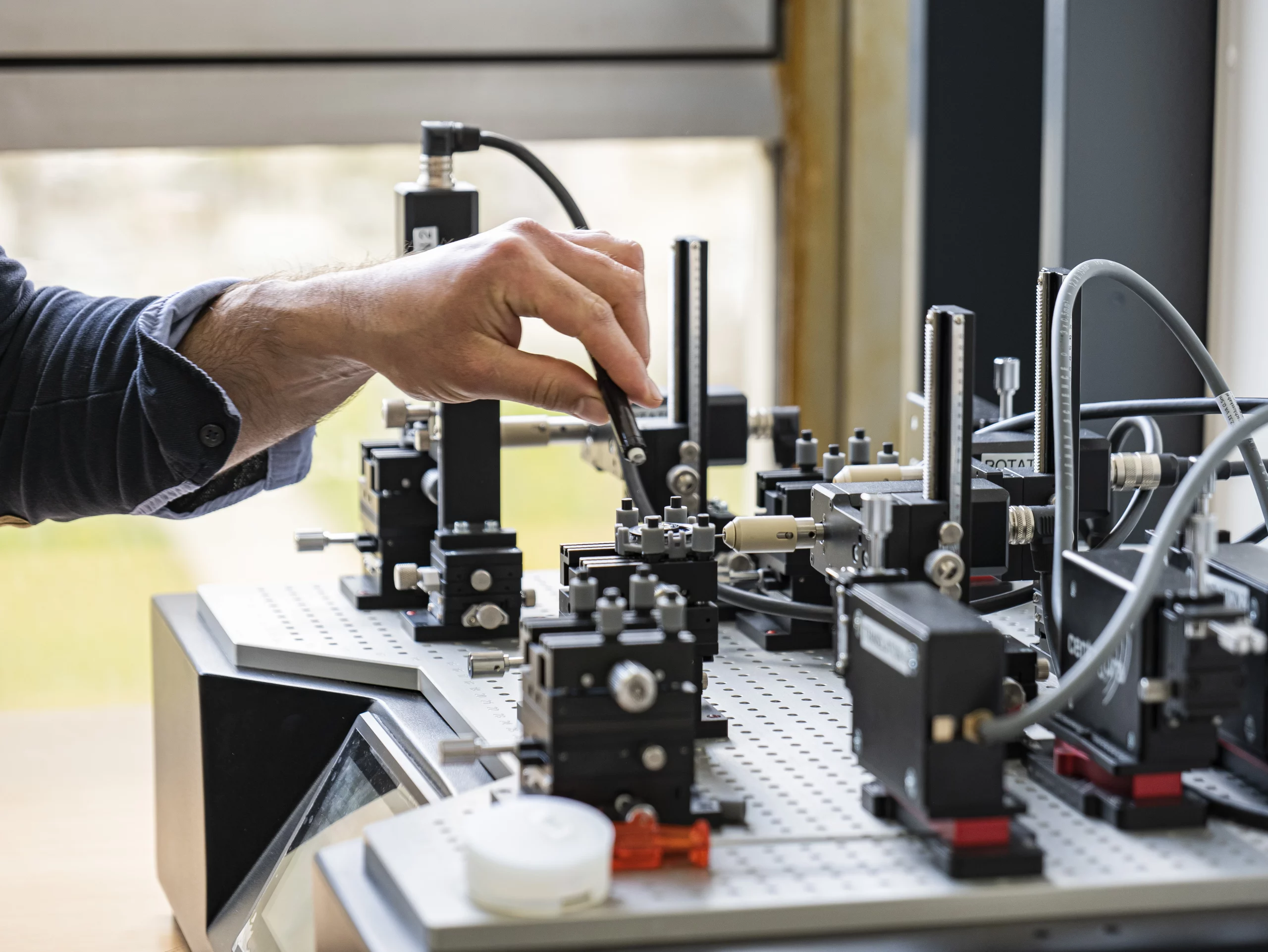
Before a watch movement is placed in its case, it must prove its reliability through a series of demanding tests. These tests, often unknown to the general public, constitute a crucial step in the development process. Qualifying a watch movement means verifying that its operation and reliability meet the standards, without compromise.
Qualification: a complete technical validation
A watch movement is a complex mechanism composed of several hundred interconnected parts. Qualification aims to guarantee that each interaction between the components behaves nominally. Before mass production, prototypes undergo a battery of tests that reproduce real-world operating conditions.
These tests are not only used to identify weaknesses, but also to predict the movement’s behavior over time. The objective is clear: to ensure stable and controlled performance, taking into account external constraints — shocks, temperatures, and conditions of use.
The essential parameters of quality control
The tests performed cover several fundamental dimensions:
- Chronometry : measurement of steps and amplitudes in different positions and temperatures.
- Power reserve : validation of the caliber’s autonomy after full winding.
- Shock tests : simulation of calibrated shocks in direction and intensity, low intensity shocks in random direction.
- Features : verification of the nominal operation of all functions (time setting, pull pressure, manual winding, automatic winding, GMT, chronograph, date, repeater, etc.).
Each function is characterized and measurements are taken using specific instruments and compared to the values defined in the design. Results outside tolerances trigger a thorough analysis followed by the implementation of corrective action.
This testing process is deployed in the form of an aging cycle to ensure the technical conformity of the caliber over time.
This phase, invisible to the end user, nevertheless determines the watch’s longevity. A qualified and reliable movement guarantees consistent performance, without degradation over time.
Mastering control at Chronode
At ChronodeEach new development is tested according to an internal protocol that often exceeds industry requirements. Testing is carried out in-house, under the responsibility of the project team’s engineers and watchmakers. This continuity allows for a precise analysis of the results and rapid adjustments if necessary.
Chronode’s philosophy rests on a simple idea: a movement is only truly complete when it has demonstrated its reliability. Qualification is not a formality, but the essential culmination of a carefully controlled development process.
An invisible but crucial step
Testing and qualification represent the final step before the movements go into production. They guarantee the product’s technical conformity to the specifications defined with the client.
Without this final validation, reliability and quality would remain a promise. Thanks to this rigorous development process, each caliber that leaves the Chronode workshops is the sum of dozens of areas of expertise, all serving a common goal: a reliable, precise and durable movement, ready to stand the test of time.